
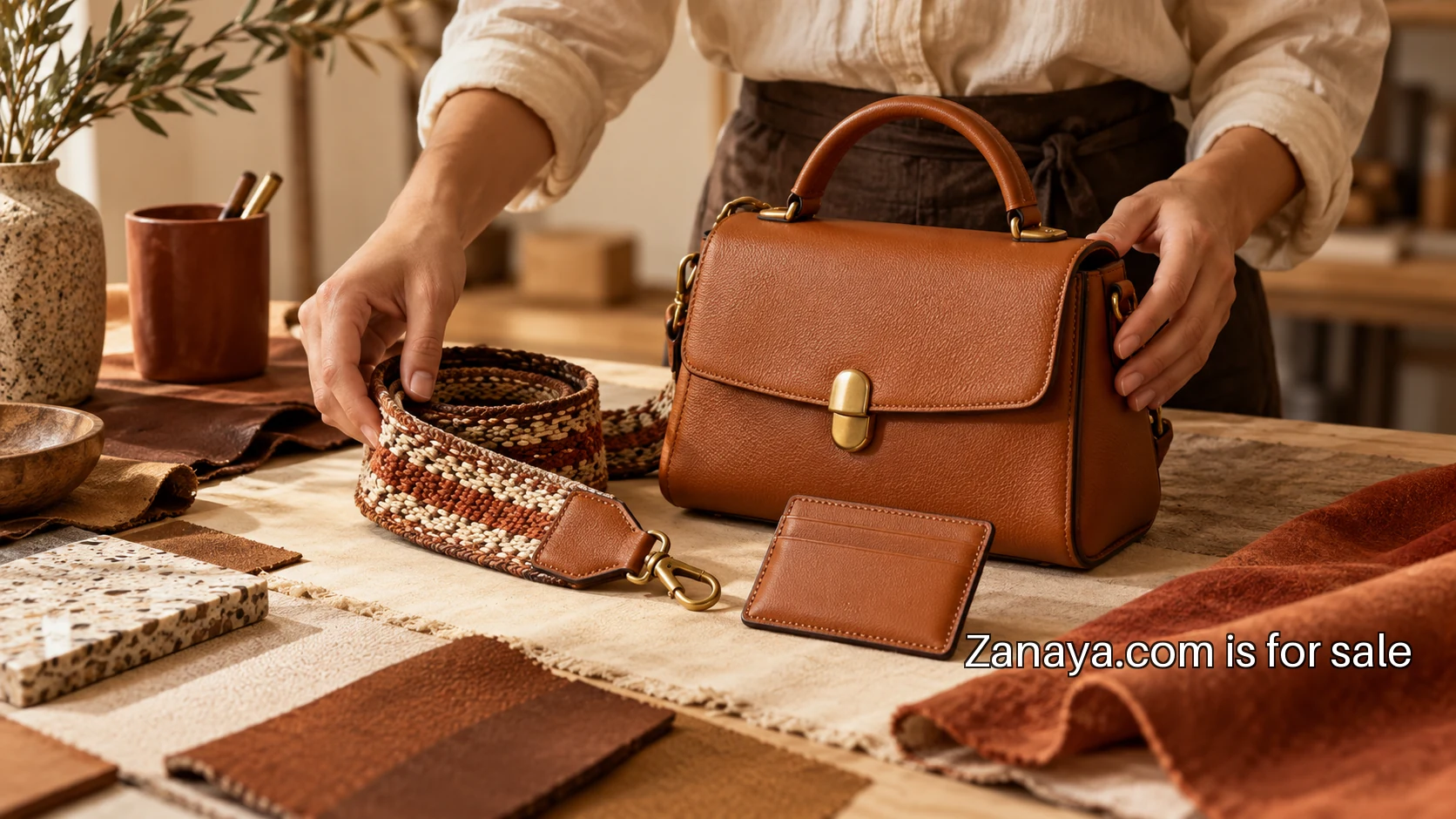
A small accessories range starts with a set of related uses. The founder decides what the first pieces do, which materials connect them and how much variation the launch can support. An assortment plan makes those relationships visible before a supplier is asked to produce samples. It also gives the later photographs and product pages a clearer job: explain the pieces people can actually choose.
Begin with the anchor piece
Choose one item to lead the collection. An everyday shoulder bag is a useful illustrative example because it brings together size, carrying comfort, access and internal organization. Write down what it needs to hold and how it is used during a normal day. The answer becomes a starting specification for the shape, the strap and the opening, rather than a loose request for something elegant.
Then decide which feature belongs to the wider label. It could be a curved edge, a particular closure or a recognizable proportion. Test the idea through quick drawings of a second piece. A shared detail should create a relationship while leaving each product useful in its own right. A founder using Zanaya can carry the same name through the label and packaging while the design language does the work of connecting the objects.
Put the assortment in a grid
Create columns for product, use, dimensions, material, color, hardware and proposed quantity. Every row represents a combination the team will have to sample, approve, describe and manage. Start with the smallest collection that makes the design idea clear. One bag and one pouch in two colors provide four combinations, each with a specific role in the launch.
Add a reason beside every proposed variant. A second size should solve a different carrying need; a second color should deserve its place in the collection. This makes it easier to remove a variant that only adds work. The grid also shows which decisions are shared. A change to one material or hardware finish may affect several rows, so the founder can see the reach of the choice before approving it.
Look for useful shared components
Ask suppliers which components can work across the proposed pieces. A lining, zip type or hardware finish may connect the assortment, but its suitability still depends on the design. A closure for a small pouch and a closure for a heavily used bag have different jobs. Put the proposed shared components in the plan and ask for confirmation against the actual products being sampled.
A component map helps the founder keep track of the conversation. Give each material and fitting a reference code, record the supplier and attach a photograph or sample reference. Keep approved and proposed components clearly distinguished. When the team discusses a replacement, it can point to a particular item and identify which products it affects. That makes sampling feedback and later production discussions much more precise.
Ask what the material description means
Material names can hide important differences in composition, finish and construction. Request clear specifications and supporting documentation for any claimed attributes. Keep that information connected to the material code used in the assortment grid. The product description should be based on the supplied material, with language the founder can explain consistently across the website, packaging and retailer information.
For environmental terminology, Textile Exchange's definition of preferred fibers and materials gives context for the kinds of improvements the term describes. A specific supplier claim still needs its own support. Use the definition to frame questions about what applies to the proposed material and what evidence the partner can provide. The result should be a precise description of the actual component chosen for the range.
Review the complete object
Request samples that can be handled as intended. Put the planned contents in the bag, adjust the strap and check the opening repeatedly. For a pouch, test the items it is meant to carry and the way the zip behaves when it is full. Photograph the details that need discussion. A construction issue is easier to resolve when the supplier can see the seam, edge or fitting being described.
Keep a sample review sheet with separate headings for function, dimensions, construction and appearance. Record what should remain unchanged as well as what needs revision. If the proposed fix alters another feature, write down that consequence and review it in the next version. The approved sample then becomes a shared reference for the product the founder has chosen, rather than one person's memory of an earlier meeting.
Plan photographs by the questions they answer
A small range still needs a deliberate image list. The anchor piece may need a front view, an interior view, a scale view and a close construction detail. The pouch needs its own view of capacity and opening. A collection photograph can show the shared colors and materials, but it should sit alongside the individual images that explain each item. Prepare that list before the shoot.
Use the same product codes in the image filenames and the assortment grid. Keep a record of which color and sample version appears in each photograph. That helps prevent a product page from showing an earlier fitting or an unapproved color. A founder can then assemble a launch page whose images, dimensions and ordering choices all describe the same finished piece.
Make options easy to choose
Write short, distinct names for sizes and colors, and use them consistently. A customer choosing a color should be able to see what is selected and which photograph represents it. The W3C guidance on form labels explains how controls can be clearly identified. Apply that principle to the choices on the product page and test the whole path with a keyboard as well as a pointer.
Product text should answer practical questions in a consistent order. Start with the use, then cover dimensions, materials, closure, strap and care information appropriate to the item. The pouch may need a clear comparison with the larger bag. Give each page a complete explanation while keeping the common details aligned. That makes the range easier to maintain when a specification changes.
Prepare for the next collection
At launch, keep a simple record of questions about fit, capacity, colors and care. Separate requests for a new product from problems with the existing one. A larger bag might deserve a future sample, while unclear dimensions on a page may need a quicker explanation. Sorting the feedback by decision type gives the founder a useful agenda for the next review with the design and production team.
Finish the initial plan by choosing the anchor piece, the supporting item and the minimum set of variants. Confirm the component map, sample review process and image list before adding more rows. A compact range gives the founder a collection that can be presented clearly and developed deliberately. With one identity across the products and their address, the next release can build on the same Zanaya name.